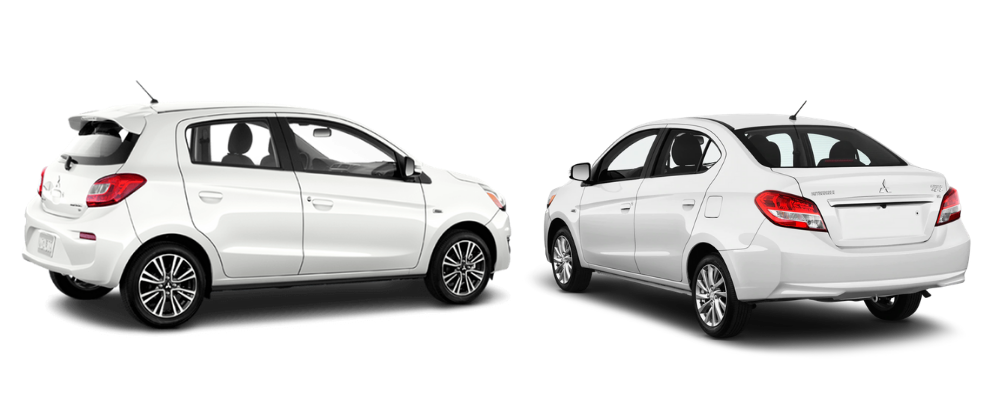

Buying the right car; hatchbacks vs sedans! What's the difference? Which one has more space? Let's take a side by side look at these two car body styles: The increasingly popular hatchbacks are sweeping the market, but are they the better option when deciding between purchasing a hatchback vs a sedan? By evaluating your lifestyle and the pros/cons of owning a hatchback, you can make the best decision for your next vehicle. Let's take a look at: Cargo Space Single Compartment Visibility Hatchback vs Sedan Purchasing a car is the second biggest buying decision in most people's lives. Narrowing down the perfect vehicle to spend your hard earned money on, isn't always simple. Looking at smaller, more compact cars you have the options of a sedan or hatchback. Both vehicles are for 5 passengers and about the same in gas mileage. What is a hatchback? A hatchback is a car with one compartment with the passenger area and cargo area. There is no partition, like in a sedan. The back trunk door, a 'hatch' or 'lift gate', swings up like an 5th door. In the photo above, you can see an example of a hatchback on the left and a traditional sedan on the right. Below see an example of the open left gate. Value Your Trade - Browse 400+ Vehicles Cargo Space The available trunk spaces on the two vehicle body types is one of the main reasons people opt for the hatchback. Being as the trunk and passenger area are one large compartment, the available storage area in a hatchback is much greater and enables cargo to be loaded and unloaded more easily. The seats can be folded how to more than double that cargo space in hatchbacks. In a sedan, if you're lucky you'll be able to fold down part of the seat to fit a small long item. This is sometimes only available on upper trim levels for sedans. For example, the Mitsubishi Mirage has 17.5 cu ft of cargo space without the seats down and 47 cu ft with the seats down. Alternatively, the Mitsubishi Mirage G4 (sedan version of the Mirage) has a max cargo space of 12.6 cu ft. Hatchback Sedan Single Compartment The single compartment of cargo and passenger areas may be beneficial for storage, there are some downsides to it. Being as the hatchback's cargo area is connected to the passenger area, the cargo is 'loose'. Meaning it is not contained within a closed space. This can be a negative because it can cause increased noise and in the case of an accident could fly into the passenger area. Also, the connected cargo compartment enables people outside of the vehicle to see into the trunk area through the windows. A way to combat this is to get a cargo shield (as seen in the Hatchback photo above), which blocks the line of sight into the trunk from outside. Lastly, since it has more interior space, this will slightly affect the speed and energy needed to warm/cool the cabin, as well as increase the solar heat adding into the vehicle. Visibility What we mean by visibility is the driver's visibility behind him or her while on the road. A hatchback offers a larger range of sight for the driver. Since the back of the vehicle is more vertical, the window provides more area to see in the rear view mirror. Hatchbacks are still on the up and up, and are not as available as sedans are. There are few models that offer a hatchback and a sedan options i.e. Mitsubishi Mirage (G4), Kia Forte(5), and Honda Civic. There are also many great only-hatchback options in the market like the Kia Soul and Kia Stinger. Which features fits your lifestyle? Browse our inventory to get a better idea on pricing and look you could be interested in. Browse Hatchbacks - Browse Sedans