
Blog

All Used Dealer Mitsubishi Outlander Mitsubishi Eclipse Cross Mitsubishi Dealer Mitsubishi Outlander Sport Trucks Dealership Outlander Tips and Tricks Mirage Outlander Sport Community Eclipse Cross Glassboro Used Cars Local Mitsubishi Outlander Plug-In Hybrid Mitsubishi Service
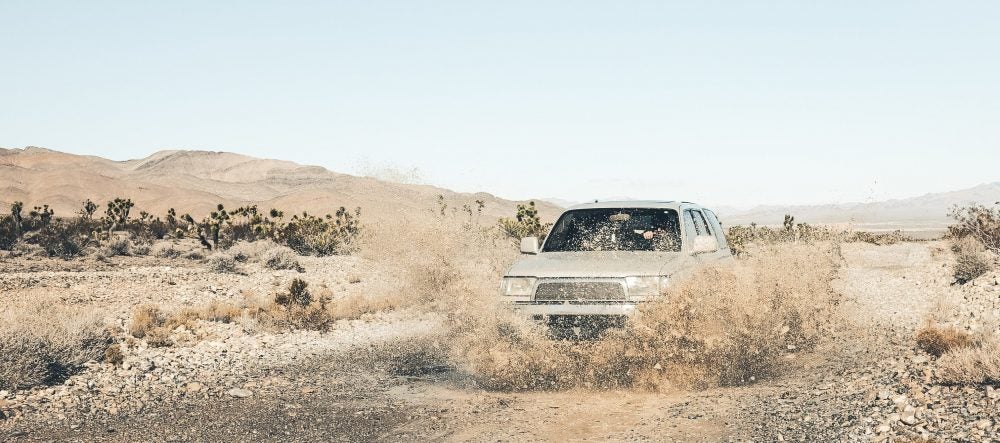
Offroading in 4 wheel drive

What does 4x4 mean: 4x4, 4WD, and AWD

What does 4x4 mean on a vehicle? In NJ and PA, we deal with all kinds of weather and road conditions. Having a vehicle with extra wheel power makes these drives smoother and safer. more Understanding the different drive systems can get a bit complicated and stressful, especially when it's involved in a big ticket item. We asked some of our truck and SUV specialists to help untangle the wires so we understand what is what. Your vehicle drive system choice will help to keep your car's driving ability in good shape in all terrains. Learn what each of these means: 4x4 4WD AWD What does 4x4 mean? "4x4" basically is saying the vehicle has four wheels total and four are powered.  When 4x4 is used, it commonly is describing 4 Wheel Drive (4WD), but technically could also mean All-Wheel Drive (AWD). At first glance, you may think they are the same but they have a few differences you want to weigh into the equation. 4WD: 4-Wheel Drive 4WD generally means the power is equally given to 4 wheels. Most 4WD are not full-time 4WD and have to be manually activated. This is a positive feature because having equal power in all 4 wheels can be harmful to your truck or SUV. Why? Due to the different distances the wheels need to travel, the speed of the inner and outer wheels differ. Take a look at the photo below illustrating a normal turn. When turning your vehicle, the outer wheels have a larger distance to travel than the wheels on the inside. Therefore, 4WD can damage your vehicle when 4WD is used in unnecessary circumstances, like on dry pavement. For off-roading and slippery situations, 4WD can be an amazing benefit to moving the vehicle by increasing the available traction to a surface. In normal driving conditions, initiate 2 wheel drive to prevent damage and also increase fuel efficiency. AWD: All-Wheel Drive Alternatively, AWD is another option for drive system with 4 powered wheels. All-wheel drive systems have power going to all 4 wheels all the time and usually can't be switched to 2 wheel drive. How this doesn't damage your car components in normal conditions, like the 4WD, is due to the dynamic power distribution to each wheel. The vehicle has sensors that examine the road conditions to dictate where the power is needed most while driving and distributes accordingly. Though this is a great feature, the driver lacks in manual control and may not be as successful off-road as a 4WD truck. For off-road excursions and a more powerful drive, 4WD takes the cake but weigh your options for both systems. AWD has more benefits driving on normal roads in bumpy conditions and also has a powerful off-road ability. At Matt Blatt, we have a large inventory of trucks, and SUV s with both types of drive systems. Find your perfect vehicle for some off-roading fun, extra driving power, and safety!
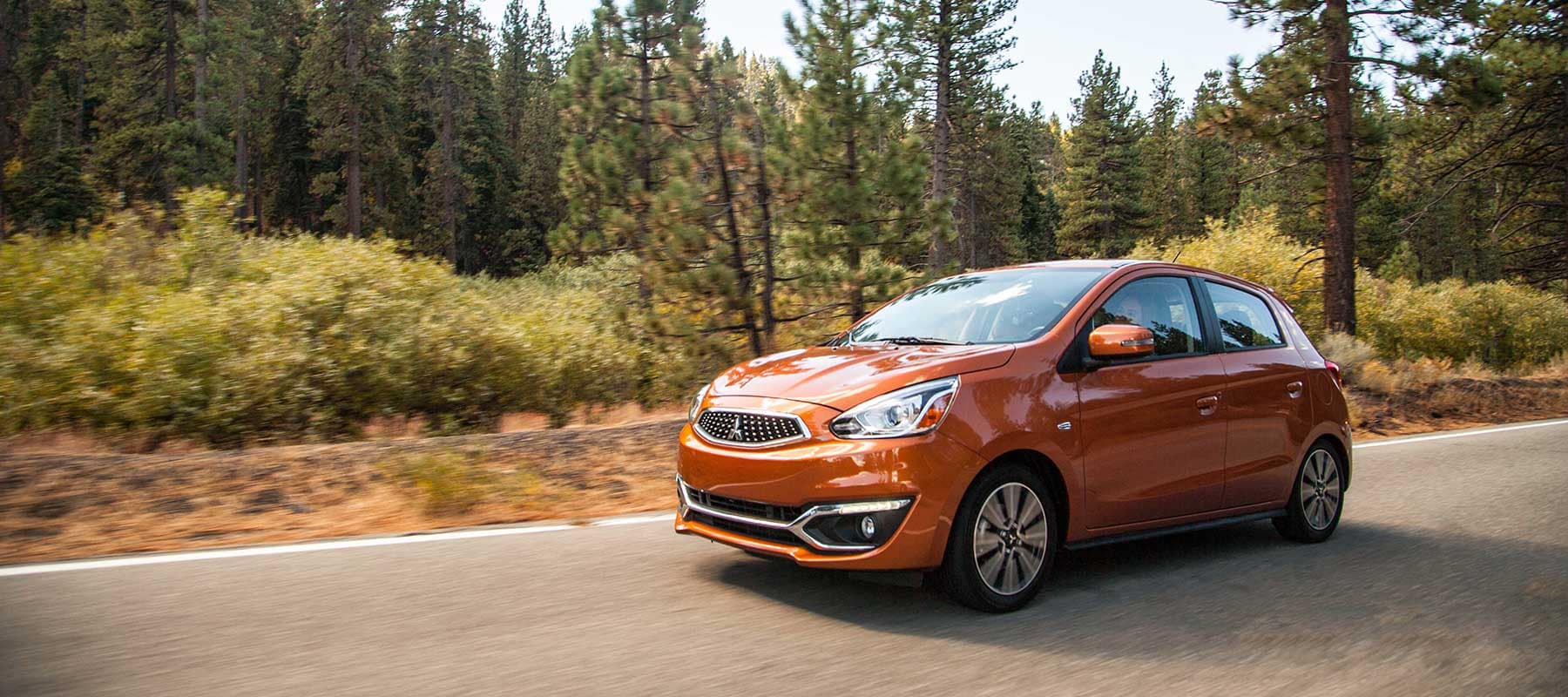
2019-Orange-Mitsubishi-Mirage

Mitsubishi Mirage Gas Mileage: How far will you go?

Are you getting your money's worth in gas? The Mitsubishi Mirage's gas mileage saves you hundreds with its amazing MPG! That's not including its extremely affordable price. Let's take a quick look at what you can expect with the Mirage. more 2019/ 2020 Mitsubishi Mirage Gas Mileage As you can see the Mirage is a compact car with easy cruising and a low starting price. Getting the most out of your ride comes down to the basic everyday costs. An average person drives about 13,000 miles a year. The budget for gas adds up quickly! Luckily, the (2019 and 2020) Mitsubishi Mirage gas mileage gets an impressive 36 MPG in the city and 43 MPG on the highway (averaging 39.5 MPG)! How much money would you save? Does it really make a difference? Let's take a look. How MPG is Calculated. First, we need to look at how gas mileage is calculated. You can get a pretty accurate current MPG by following these easy steps: Fill up your tank. Reset your trip odometer to start the new miles recording at zero. Drive your car normally until at least 2/3rds of your tank is empty (the less gas left the more accurate your MPG will be). Refill your tank and RECORD the amount of gas it took to fill again. Finally, record the reading on the odometer. Divide the miles driven by the number of gallons to refill. (Miles/Gallons) This will equal your miles per gallon! For example, you filled up your tank and reset the odometer. Then, drove 346 miles. You refill your tank and it fills with 18.4 gallons. 346/18.4=18.8 Your MPG would be 18.8 MPG! The gas price at Wawa today (January, 8th 2020) in Glassboro, NJ is $2.60 a gallon. That means the 18.4 gallons of gas costs $47.84! Your current ride, as used in the example above, only gets you 346 miles for that price. Let's compare it to the Mitsubishi Mirage gas mileage, that gets an average of 39.5 MPG. 18.4 gallons  x 39.5 MPG = 634.8 miles You get almost double the distance for the same $48.76 (or half the price to travel the same 346 miles). Going back to the average miles driven in a year, 13,000 miles, how much is saved with the Mirage? Let's do the math: Example Car:   13,000 miles driven a year  ÷ 18.8 MPG = 691.5 gallons a year 691.5 gallons  x $2.60 a gallon  = $1,797.90 spent on gas Mirage:   13,000 miles driven a year  ÷ 39.5 MPG = 329.1 gallons a year 329.1 gallons  x $2.60 a gallon  = $855.66 spent on gas Your car will slightly differ due to the average gas mileage range. But you can see the huge savings from the amazing gas mileage of the Mitsubishi Mirage. You are saving $960.36 per year. Save you money commuting with the right ride. Check out the new Mitsubishi Mirage and start saving now.

Contact Us

Fill out this form below and we'll contact you shortly
*Required Fields