

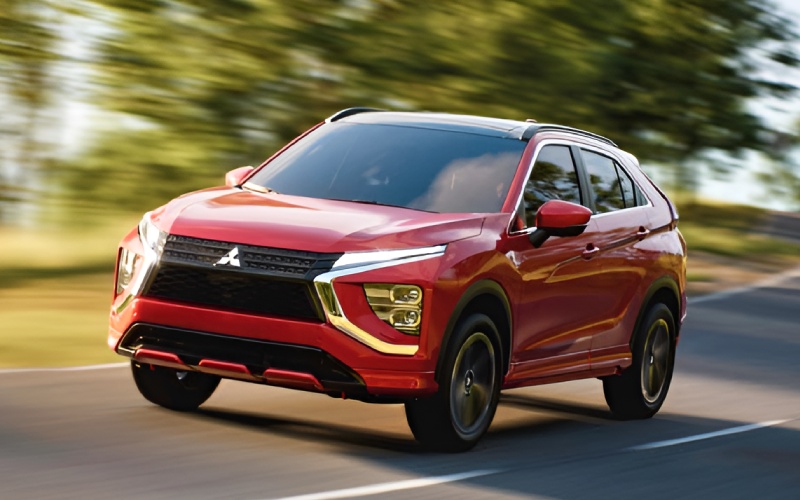
Matt Blatt Mitsubishi – Which AWD performs better for everyday drives around Sewell, NJ — S-AWC on the 2026 Eclipse Cross or AWD on the 2026 Corolla Cross?
When shoppers in Sewell, NJ compare the 2026 Mitsubishi Eclipse Cross and the 2026 Toyota Corolla Cross, one question rises above the rest: which all-wheel-drive system inspires more confidence in day-to-day driving? It’s a fair question. Our region mixes low-speed neighborhood streets, uneven or patched surfaces, and busy ramps onto NJ-55, plus wet leaves and rain-slicked mornings that can test traction as you roll from one errand to another.
The Eclipse Cross brings Super-All Wheel Control (S-AWC) as standard on every trim. That’s a big deal, because you’re getting coordinated traction management on day one—no special package or grade required. S-AWC integrates traction, braking, and yaw control to help the vehicle track where you point it, then layers in selectable Auto, Snow, and Gravel modes so you can tailor its behavior to conditions. The 2026 Corolla Cross offers available AWD on gas models and standard Electronic On-Demand AWD on hybrid models. It’s responsive and helpful, but it doesn’t add the same level of integrated control logic or dedicated Snow/Gravel modes you’ll find in the Mitsubishi.
What S-AWC does differently
S-AWC constantly evaluates wheel speed, steering input, and yaw to fine-tune how torque and braking are applied. In plain language, it aims to give you a stable, confident line through a corner and more poised launches on slick surfaces. On a damp morning heading from a residential lane to a faster arterial near Sewell, that poise helps reduce drama—fewer scrabbles, steadier steering, and calm progress even when traction changes under load.
- Selectable modes: Auto, Snow, and Gravel settings help the Eclipse Cross adapt to wet pavement, loose surfaces, and light off-pavement situations like unpaved parking lots.
- Integrated control: Active Yaw Control works with stability and traction systems for more faithful responses to your steering input.
- Every-trim coverage: Because S-AWC is standard, you don’t have to shop for a specific grade to get the full benefit.
By contrast, Corolla Cross AWD is designed to engage when the system detects slip or anticipates a need for rear-axle assistance. It’s friendly and predictable, especially in the hybrid where the rear axle is powered by an electric motor. For many drivers, that will be adequate. But if your daily pattern includes frequent surface changes, tight uphill turns, or quick merges on short on-ramps, the added precision and selectable modes in the Eclipse Cross can translate into fewer corrections and an overall calmer drive.
Real-world scenarios around Sewell, NJ
Picture a weekday loop that includes neighborhood streets with scattered gravel, a left turn onto a busier two-lane, and then a brief blast to merge with NJ-55 traffic. With S-AWC in Auto, the Eclipse Cross simply feels settled—modulating traction to keep the nose pointed where you want it. On a rainy day, toggling to Snow helps dull abrupt wheelspin as you cross painted lines or manhole covers. Pull into a packed, unpaved lot at a youth sports complex? Gravel mode lends more predictable throttle and torque distribution, reducing wheel chatter as you park or inch out of a rut.
The Corolla Cross AWD counters with solid composure, and Toyota Safety Sense 3.0 layers in driver-assistance support. But without dedicated Snow/Gravel modes or the same integrated control philosophy as S-AWC, it’s more reactive than proactive in mixed-surface transitions. If you’re particular about steering feel and stability right at turn-in, the Eclipse Cross often feels more reassuring, especially at the lower speeds where most daily driving actually happens.
Traction is only part of the story
Confidence is holistic. The Eclipse Cross backs S-AWC with available features that smooth the edges of everyday driving. The available Multi-View Camera System makes tight parking more transparent, and the available Handsfree Power Tailgate makes quick work of cargo when your hands are full. Mitsubishi Connect with Safeguard And Remote Services (enrollment required) offers a 24-month trial for added peace of mind. Wireless Apple CarPlay and Android Auto are available to keep you connected without extra cords cluttering the console.
- Parking assurance: Available Multi-View Camera System offers an overhead perspective for crowded lots and parallel spots.
- Everyday ease: Available Handsfree Power Tailgate simplifies loading while you manage kids, gear, or groceries.
- Connected support: Mitsubishi Connect with Safeguard And Remote Services includes a 24-month trial for remote and emergency features.
Toyota brings its own strengths, including the intuitive Toyota Audio Multimedia system and the breadth of Toyota Safety Sense 3.0. Both SUVs offer wireless Apple CarPlay and Android Auto. But if we’re comparing traction plus useful visibility tech that helps before any wheelspin happens, the Eclipse Cross stacks the deck in your favor.
Test-drive tips to feel the difference
We recommend a short route that mimics your commute—slower side streets, a quick merge, a U-turn, and parking. In the Eclipse Cross, toggle Snow and Gravel for a block or two to feel how throttle response and traction settle the vehicle. Do the same loop in the Corolla Cross and pay attention to how the rear axle engages and whether you need extra steering corrections through the first moments of a turn.
- Start on a quiet street: Note initial traction from a stop and steering stability on damp or uneven patches.
- Practice a quick merge: Feel how confidently each SUV builds speed and holds line under throttle.
- Finish with a tight park: Try backing into a space—compare Eclipse Cross’s available Multi-View Camera System with the Toyota’s camera clarity and guidance.
Frequently Asked Questions:
Is S-AWC standard on every 2026 Mitsubishi Eclipse Cross?
Yes. Super-All Wheel Control is standard on every Eclipse Cross trim, so you don’t need to upgrade to get full-time traction and selectable drive modes.
Does the 2026 Toyota Corolla Cross offer a drive mode for snow or gravel?
Corolla Cross AWD is capable and responsive, but it does not include the dedicated Snow or Gravel modes you’ll find with S-AWC on the Eclipse Cross.
Can both SUVs tow a small utility trailer?
Yes. Properly equipped, both the Eclipse Cross and Corolla Cross are rated to tow up to 1,500 pounds, which covers many small trailers and hitch-mounted accessories.
Which SUV feels more settled on mixed surfaces at low speeds?
While both are composed, the Eclipse Cross often feels more planted thanks to S-AWC’s integrated control and selectable modes, especially when surfaces change mid-corner or during slow, tight maneuvers.
At Matt Blatt Mitsubishi—serving Sicklerville, Williamstown, and Sewell—we focus on how each system behaves where you actually drive. If you want an AWD approach that’s proactive, customizable, and standard, the 2026 Eclipse Cross is the clear pick. Bring your typical route, and we’ll help you feel the difference in one visit.
Request more 2026 Mitsubishi Eclipse Cross information
Connect with us


Recent Blog Entries
- Is all-wheel drive offered on the 2026 Outlander Sport or the 2026 Trax for Sewell, NJ drivers?
- Which AWD performs better for everyday drives around Sewell, NJ — S-AWC on the 2026 Eclipse Cross or AWD on the 2026 Corolla Cross?
- Which SUV offers more real-world cargo and seating versatility — 2026 Mitsubishi Outlander or 2026 Toyota RAV4 — for families near Williamstown, NJ?
- Mitsubishi Connect and Confidence Tech in the 2026 Eclipse Cross for Philadelphia, PA Drivers
- Mitsubishi vs Toyota for flexible family SUV ownership in Glassboro, NJ